
In this article

For legal leaders at public companies, the question is no longer whether AI will reshape the general counsel function. It already has. From board preparation and compliance monitoring to entity management and regulatory tracking, legal AI for general counsel is moving from pilot project to operational infrastructure faster than most predicted.
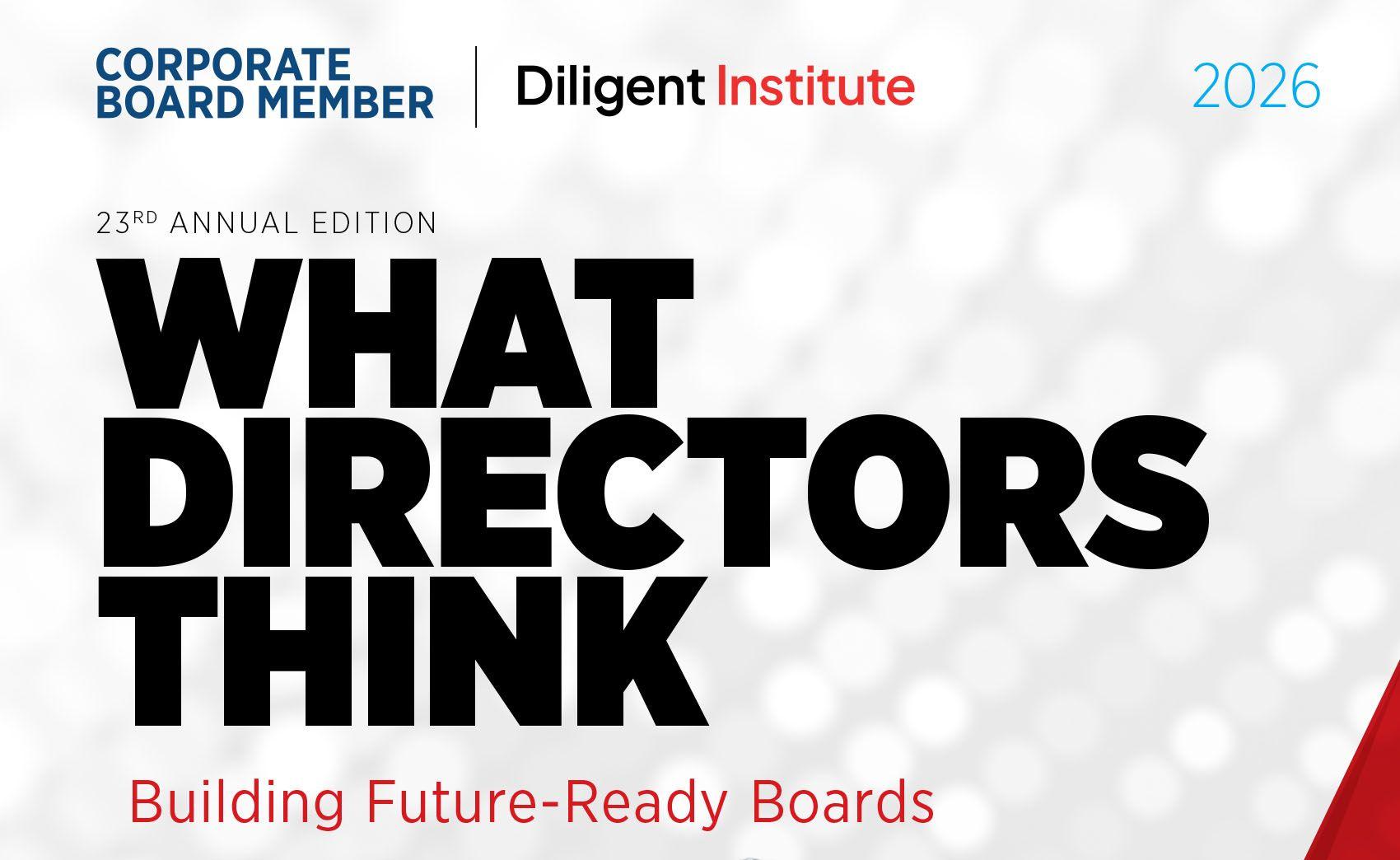
According to What Directors Think 2026 by Diligent Institute and Corporate Board Member, 84% of directors believe boards should play a more active role in technology oversight, yet only 22% say their boards have formal AI governance processes for board AI usage. That gap between ambition and governance readiness is precisely where general counsel are stepping in, not as reluctant gatekeepers but as strategic champions of responsible adoption.
The most successful legal leaders are not chasing the flashiest use cases. They are focused on applying AI where it solves recurring, time-intensive problems, from board meeting preparation to regulatory compliance tracking, while maintaining the control, security and accuracy their organizations demand.
This article covers how forward-thinking general counsel are using legal AI to strengthen governance:
General counsel today are navigating a moment of rapid change and rising pressure. From mounting regulatory demands to increasing board visibility, the GC’s role is expanding. At the same time, AI is maturing from buzzword to board-level priority. The question facing most legal leaders is not whether to engage with it, but how to do so responsibly.
That expansion puts the GC at a natural intersection. Legal leaders already oversee the governance frameworks that any enterprise AI program requires. They understand regulatory risk, data privacy, intellectual property and the compliance obligations that come with deploying new technology. That makes them the logical executive to bridge the gap between innovation and accountability.
“Governance is like an iceberg. The part that fits above the water is what most people see. That includes board meetings, your board directors, your agenda and your minutes. But below the surface is where the complexity lives, like risk, audit, compliance, legal entity management, legal operations.”
— Brian Stafford, CEO at Diligent
According to the Director Confidence Index by Diligent Institute and Corporate Board Member (March 2026), directors increasingly look to their general counsel for guidance on how to govern emerging technology without slowing the organization down. For GCs, that means AI adoption is not a technology project to delegate. It is a governance mandate to own.
The use cases generating the most traction are not experimental. They solve real, recurring problems that consume disproportionate time in legal departments: board governance, compliance tracking, entity oversight and regulatory monitoring.
Boards rely on GCs for more than legal advice. They expect clarity, risk perspective and strategic input. But preparing for board meetings, gathering past materials, formatting documents, cross-checking disclosures and tracking action items often consumes time that should go toward shaping recommendations. Purpose-built AI tools now integrated into board management software can streamline how legal teams build, review and distribute board materials without sacrificing control.
Regulatory expectations are rising and scrutiny is intensifying. Legal teams can no longer afford fragmented systems or manual processes for tracking compliance obligations across jurisdictions.
AI-powered monitoring can continuously scan regulatory sources, filter for organizational relevance and generate prioritized alerts, replacing the manual tracking that typically identifies changes weeks after publication. For GCs managing corporate governance reporting across multiple business units, that shift from reactive to proactive monitoring is significant.
Beyond the boardroom, GCs are increasingly responsible for maintaining the integrity of the organization’s legal structure and staying ahead of shifting compliance landscapes. With regulatory expectations rising, legal teams need structured, accurate and accessible entity data. AI-powered entity management platforms give legal teams visibility and control over corporate records and compliance obligations, automating routine data entry, validation and document formatting while surfacing key information in seconds.
“AI is an exponential growth phenomenon where most businesses are currently overestimating the short-term impact and still dramatically underestimating the long-term potential and impact.”
— Florin Rotar, Chief AI Officer at Avanade
See how GCs are using AI to simplify board prep, improve compliance and increase their strategic impact.

Adopting AI well takes more than interest. It takes leadership. GCs are in a unique position to shape how their organizations adopt AI: thoughtfully, securely and with clear outcomes in mind. The following framework sequences the work so each step builds on the last.
Even with the right framework, legal departments face predictable obstacles when moving from consideration to implementation.
Professional trust, not technical capability: The primary barrier to adoption in legal departments is professional trust, not technical capability. Legal professionals are trained to verify, not assume. Start with low-risk, high-visibility use cases that demonstrate tangible time savings before expanding to client-matter or privileged workflows.
The technology roadmap gap: Many legal departments lack a formal technology roadmap. That means AI adoption decisions happen ad hoc, without clear evaluation criteria or success metrics. Establishing a roadmap, even a simple one, creates the structure needed to evaluate tools consistently and sequence deployment logically.
Security and privilege concerns: Legal teams handle sensitive, often privileged information. Any AI tool used in legal workflows must meet enterprise security standards, maintain strict access controls and preserve privilege protections. That means evaluating vendors on security architecture, not just feature sets.
Stakeholder alignment: According to the Q4 Business Risk Index by Diligent Institute and Corporate Board Member, 44% of governance, legal and compliance leaders cited cross-function coordination as an improvement area. For AI adoption, that means building alignment with IT, compliance and business units before deployment, not after.
The challenges documented above, time-consuming board preparation, fragmented compliance tracking and manual entity management, are the specific problems that Diligent’s purpose-built AI tools address when embedded within structured legal workflows.
Within Diligent Boards, the GovernAI suite offers advanced capabilities tailored for board governance:
For entity management, Diligent Entities gives legal teams new visibility and control over corporate records and compliance obligations:
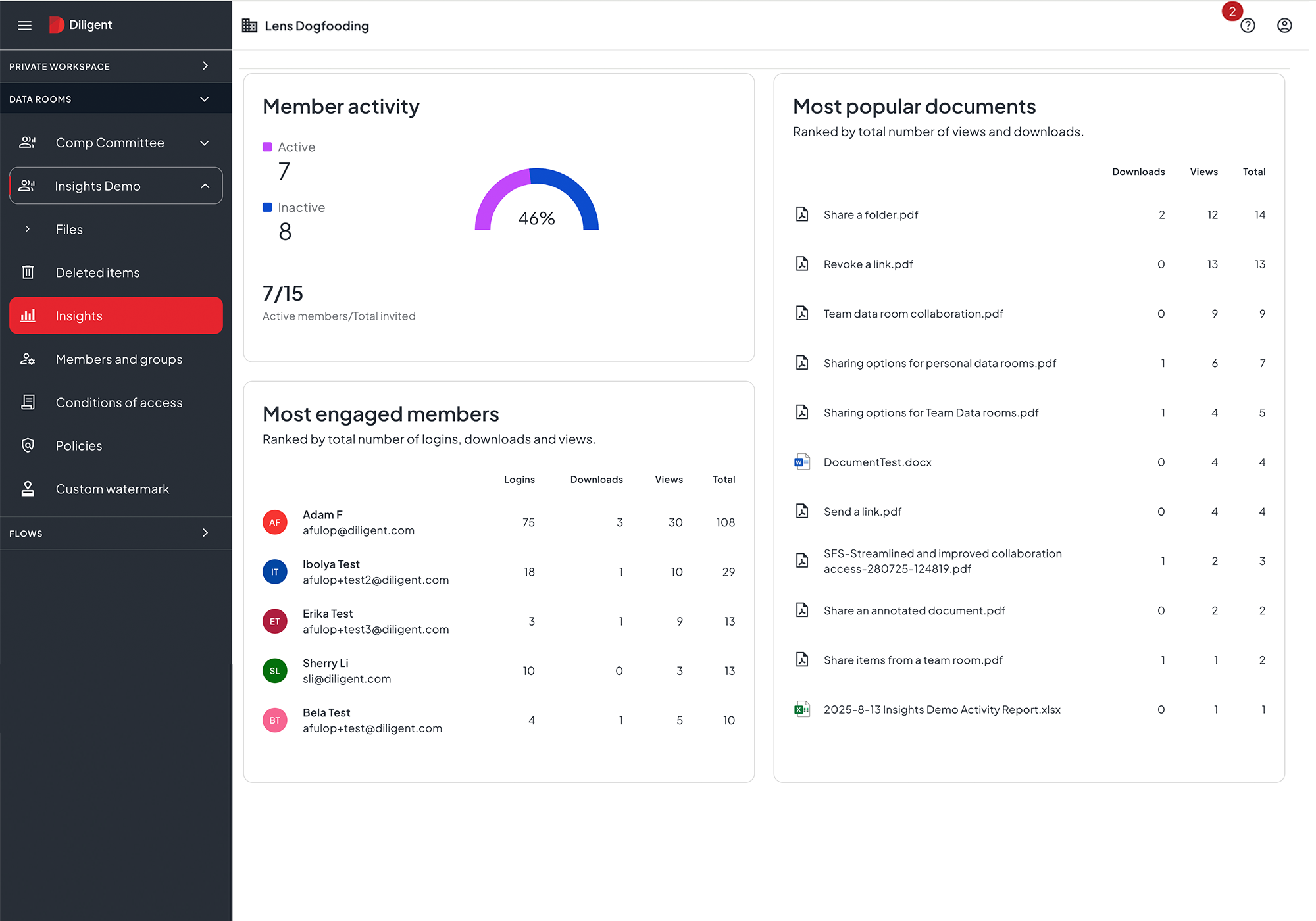
“Having Entities has been so much easier. Our entity data used to be on an Excel sheet, but now it’s so nice to have a one-stop shop. It’s been a really beneficial tool.”
— Savannah Washco, Corporate Paralegal at Barings
For GCs, this means less time chasing details and more time advising leadership, preparing for transactions and ensuring regulatory readiness. As automation removes inefficiencies and AI adds intelligence, legal departments evolve from operational hubs into strategic enablers.
AI is here. The general counsel offices that invest in governance-first adoption now, starting where AI can help most and building controls before expanding, are the ones positioning their organizations for lasting advantage. With the right tools and the right approach, GCs are proving they are not just advisors to AI adoption. They are leading it.
Experience the advanced AI capabilities of Diligent Boards and Diligent Entities to elevate your governance strategy with confidence and security. Schedule a demo.
AI is shifting the GC role from operational gatekeeper to strategic technology leader. By automating time-intensive workflows like board preparation, compliance monitoring and entity management, AI frees legal leaders to focus on higher-value advisory work, including governing AI adoption itself.
The most effective use cases combine high information volume with repeatable review criteria: board book preparation, regulatory change monitoring, entity data management, compliance obligation tracking and corporate governance reporting. These workflows generate significant time savings while maintaining the control legal teams require.
Evaluate AI tools based on security architecture, privilege protection, audit-trail capabilities and accuracy, not just feature sets. Purpose-built solutions designed for governance and legal workflows are more likely to meet enterprise requirements than general-purpose AI systems.
At minimum, define permitted use cases, data handling requirements, human oversight standards and vendor procurement criteria. A written AI governance policy backed by operational controls should be in place before any AI tool is deployed in legal workflows.
Purpose-built tools are designed for the specific security, accuracy and compliance requirements of governance and legal workflows. They maintain enterprise access controls, preserve audit trails and integrate with existing governance infrastructure, which general-purpose AI systems typically do not provide.
Ready to lead AI adoption with confidence? Schedule a demo to see how Diligent’s AI capabilities support your governance strategy.