
Governance work rarely arrives one task at a time. Agendas need building, entity records need updating, filings need tracking, and teams need to collaborate without losing control of who sees what. The latest Diligent Boards and Diligent Entities updates help reduce manual steps, tighten controls, and keep records aligned as work moves.
Here’s what’s new.
Rebuilding agenda layouts in Word before every meeting slows board prep down. Custom Agenda Templates lets administrators upload Word templates with their preferred branding and formatting directly into Boards, preview them, set a default, and remove old versions. When creating an agenda or book, users select a template and the export automatically follows that layout, while agenda content remains managed in Agenda Builder.
Boards now makes note collaboration clearer and easier to manage. Shared Notes on Boards Web Director lets users choose exactly which colleagues can access a note, bringing selective sharing to the web experience. At the same time, the note type selector is now always visible when creating or editing a note, so users can immediately choose between note types without opening a dropdown.
Reply chain notifications also help teams stay on top of follow-up. Anyone who has commented in a public note thread now receives notifications when new replies are added, and shared note emails use clearer wording so users can tell the note type at a glance.
Minutes improvements in this release remove some everyday friction. A new Properties link next to the minutes title gives faster access to minutes settings, and actions can now be reassigned to a different section without being deleted and recreated. The release also fixes trailing commas in attendee exports, improves AI pre-generation messaging, and resolves duplicate email notifications for pending actions.
Administrators can now configure multi-factor authentication separately for login and password reset. This gives teams more control over how security is applied across different workflows, so verification requirements can better match internal policy and risk tolerance.
Boards is also testing a clearer meeting reminder subject line. Instead of a generic reminder, some sites will now receive emails that show the timing directly in the subject line, making it easier to understand when a meeting is coming up without opening the message. This is a temporary test running through mid-June.
The Education & Templates Library now offers an Investor Stewardship Fundamentals Learning Path. The resource package includes short courses, videos, and practical templates covering the fundamentals of investor engagement, shareholder activism, proxy advisors, and related preparation work. For teams building governance expertise in-house, it gives a useful starting point without requiring outside support.
AI Import & Actions now supports bulk upload, helping teams turn document backlogs into structured entity updates faster. Users can upload up to 10 documents at once, and the AI identifies the relevant entity, extracts key details, and recommends next steps such as creating appointments or filing documents. Each proposed action is still reviewed before anything is committed.
This is particularly useful for updating appointments, processing documents that sit outside the system, or bringing post-acquisition information into the record without relying on manual re-entry.
SharePoint and OneDrive upload also makes it easier to bring documents into Entities from where teams already work. Instead of downloading files and uploading them again, users can select documents directly from SharePoint or OneDrive through the Import wizard and move them into the system of record with fewer steps.
For UK entities, new Identity Verification reporting helps teams report on individuals’ IDV codes. Users with access to system reports can generate a report showing individuals with UK IDV codes and narrow it to a specific company when needed. Because the new report includes sensitive data, it cannot be saved to working documents, helping teams balance operational visibility with data protection.
Entities can now automatically action pending events after e-filing acceptance, helping records stay aligned without manual follow-up. Once a filing is accepted by the relevant registry, the system updates the event from Pending to Actioned, refreshes company records and compliance dates and logs the activity in the audit trail.
This keeps your records completely up to date, while reducing the manual effort to do so – a small system change, with a huge operational and time-saving impact.
Already a Diligent customer? Log in to explore the latest updates or speak with your customer success manager if you need help enabling the right capabilities for your team.
Not yet a customer? Request a demo to see how Diligent supports board and entity workflows with fewer manual steps and stronger control.
Can I use these features on mobile?
Access board materials and stay on top of meeting prep using the Diligent Boards app, available on the App Store and Google Play.

Global State of Legal Entity Compliance 2026 report
Discover the latest insights on legal entity compliance in the 2026 report, designed for governance leaders navigating complex mandates. Benefit from data-driven analysis and practitioner perspectives to transform your entity governance model, assess AI readiness, and prioritize strategic improvements. Download now to chart a practical path towards intelligent compliance.
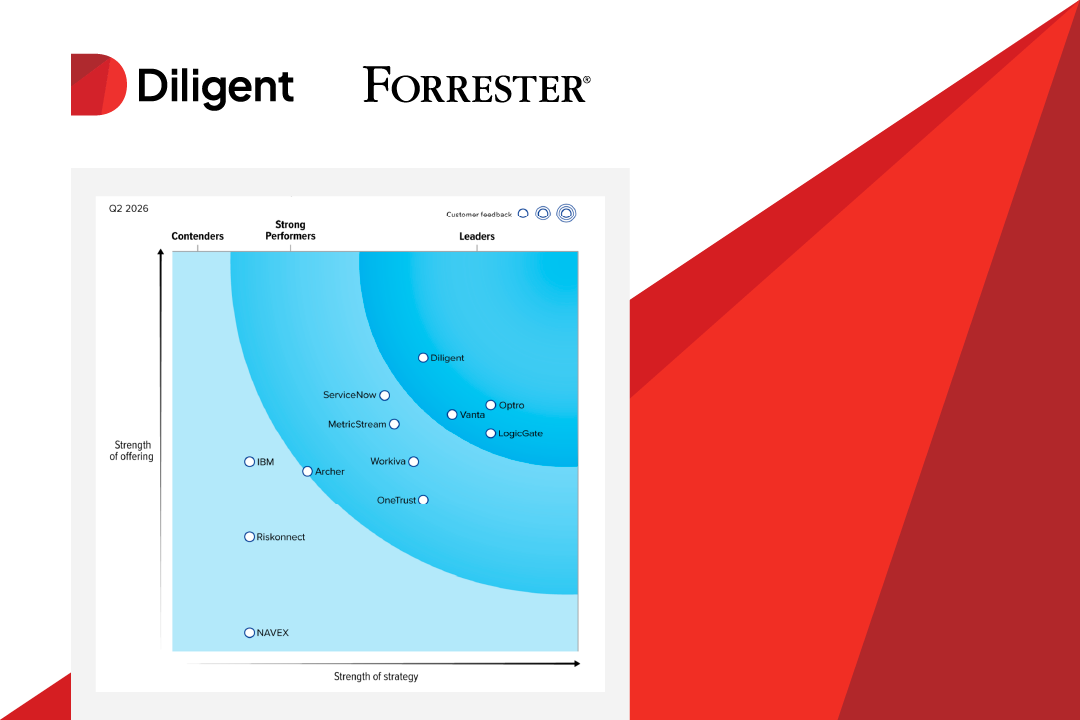
Forrester Wave™ GRC Platforms Q2 2026 Report | Diligent
This Forrester Wave™ report provides independent analysis to help GRC leaders evaluate the most significant platforms in the category. See why Diligent was named a Leader — with the highest scores possible across the criteria of platform use of AI and AI agents, risk identification, risk intelligence, risk quantification audit management, compliance management and enterprise risk management (ERM) — and what that means for you.

More obligations, the same team: New global data reveals why entity compliance is under structural strain

Discover how entity compliance teams can thrive under pressure with insights from Diligent's Global State of Legal Entity Compliance Benchmark Report. Learn about the challenges faced by governance professionals, the evolving role of AI, and strategies for scaling operations effectively while maintaining control and visibility. Download the full report to benchmark your function and unlock the potential of smarter entity management.