


Podcasts

How school boards benefit from student voice in governance

This episode of the Leading with Purpose podcast features Zachary Patterson, co-founder of the National Student Board Member Association and former student school board member, on the real value of having students at the board table. He explains how student members can improve policy, culture and outcomes when they are elected, properly onboarded and given the same access and trust as other board members. You’ll learn practical steps to move from a symbolic student seat to meaningful representation, including election models, training, technology access, and ongoing support. Zachary also introduces the new Edvanced Cohort from Diligent, NSBMA and COSBA, designed to provide governance education, leadership development and mentorship for student board members across the U.S. If you found this episode helpful, please take a moment to rate and review the Leading with Purpose podcast wherever you listen—it really helps other education leaders discover the show.
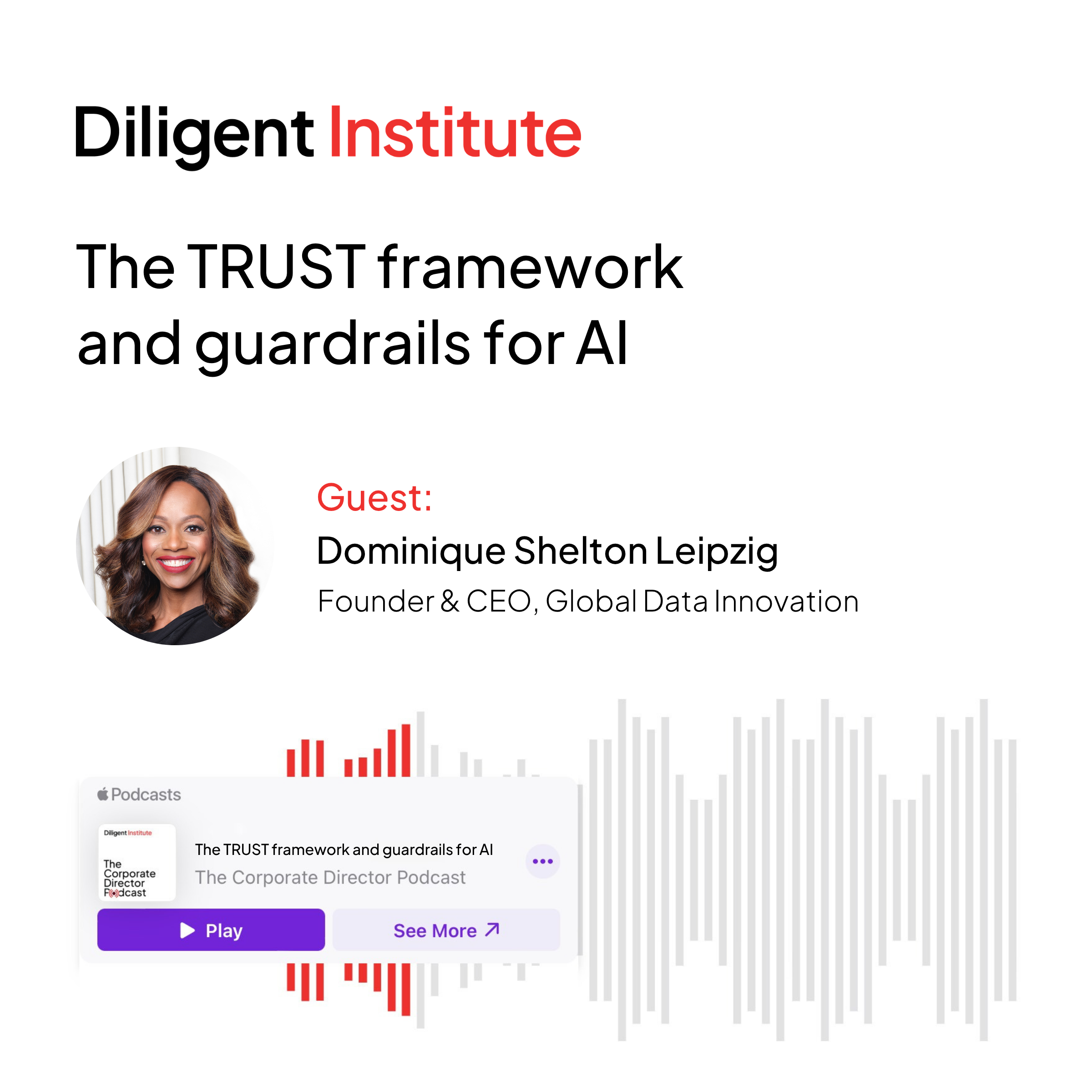
The TRUST framework and guardrails for AI

In this episode of the Corporate Director Podcast, Global Data Innovation founder and CEO Dominique Shelton Leipzig outlines how boards can move from AI “deer in headlights” to disciplined oversight. She how her TRUST framework zeroes in on the handful of controls that would have prevented most real-world AI failures to date. Dominique also breaks down what directors need to know about the EU AI Act, the board questions that matter most (from AI use cases to uninterrupted monitoring), and why even board use of consumer AI tools needs clear policies and training. If you find this conversation helpful, please rate and review the Corporate Director Podcast and share it with your board and governance network.
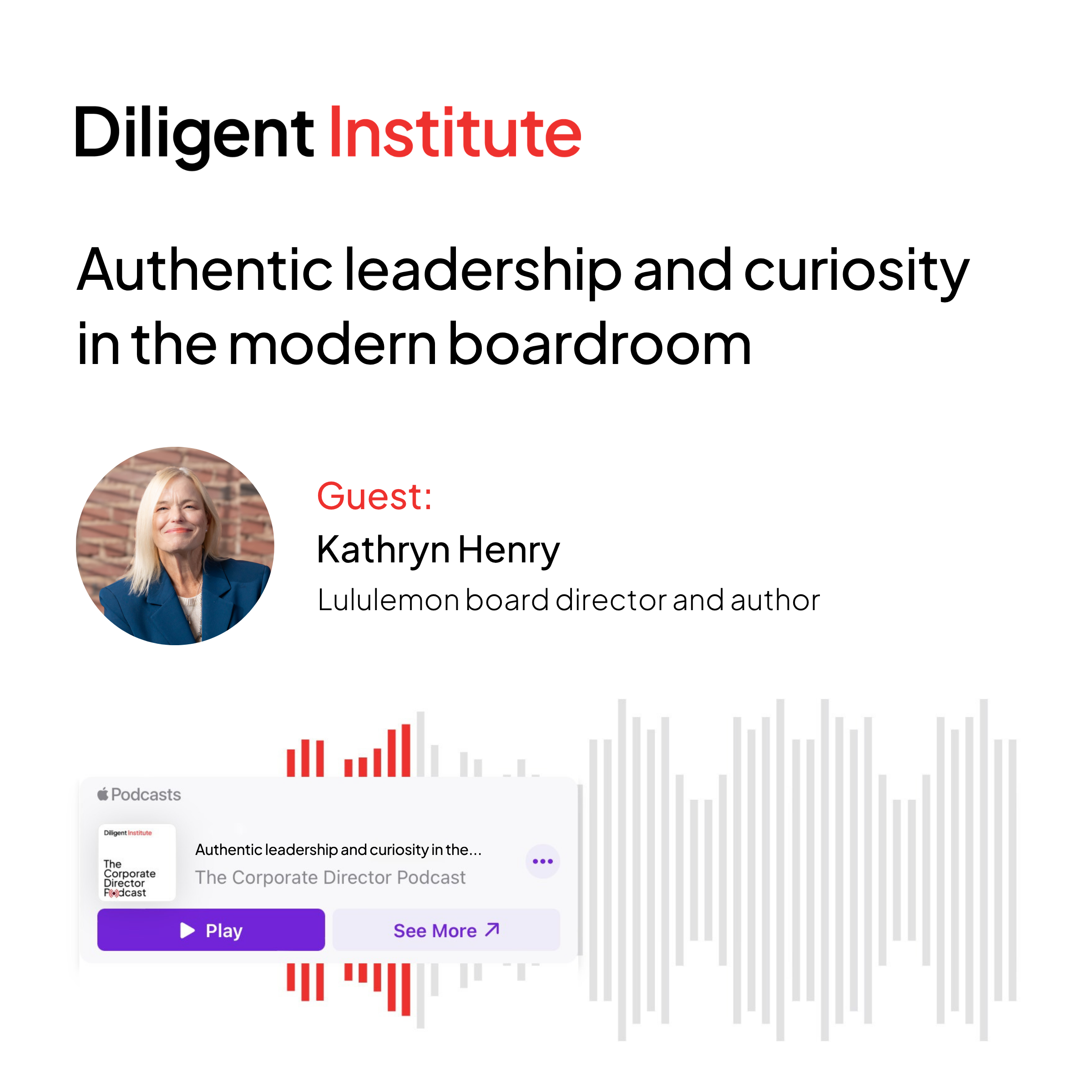
Curiosity, courage and authenticity in the modern boardroom

In this episode of the Corporate Director Podcast, Lululemon board director and author Kathryn Henry unpacks how personal adversity reshaped their approach to leadership and governance. They discuss why today’s most effective directors lead with curiosity, emotional intelligence and service to all stakeholders – not just technical expertise. Hear practical ideas for building trust in the boardroom, having the hard conversations, reading what’s left unsaid, and working productively amid uncertainty, AI disruption and competing stakeholder expectations. Kathryn also shares their passion for mentoring the next generation of leaders and why boards must embrace broader, more diverse perspectives to meet the challenges ahead. If you find this conversation useful, please rate and review the Corporate Director Podcast in your podcast app to help other governance leaders discover it. Further resources: Explore Diligent Institute’s latest research on board effectiveness, stakeholder governance and AI in the boardroom, and look out for Kathryn Henry’s memoir A Dime to Say I Love You for more on their leadership journey.
Making board self‑assessment part of your governance DNA
What makes board self-assessment a meaningful driver of governance improvement rather than a box-ticking exercise? In this episode of Leading with Purpose, governance experts Barbara Paxton and Steve Schroeder share practical advice for mission-driven boards on gathering honest feedback, building trust, and turning evaluation results into action. They discuss the key elements of effective self-assessments, common pitfalls to avoid, and how boards can make continuous improvement part of their governance DNA.
The World’s Most Ethical Boards: What top boards do differently

What truly distinguishes the world’s most ethical boards from their peers? In this episode of the Corporate Director Podcast, ethics and compliance leaders Erica Salmon Byrne of Ethisphere and Neta Meidav of Diligent share new joint research on practices present in the world’s most ethical boardrooms. They explain how leading boards structure independence and diversity, use skills matrices, and oversee intangible assets like culture, reputation and brand.
Quantum computing and the board: Managing risk, migration and opportunity
Quantum computing is no longer a distant theoretical concept—it is rapidly becoming a board-level issue. In this episode of the Corporate Director Podcast, quantum leader and cybersecurity expert Dr. Aaron Kemp explains what quantum computing is, how it differs from classical computing, and why it matters for corporate strategy and risk.
Board leadership through transformation

In this episode of the Corporate Director Podcast, Tracy Nolan discusses how boards can lead more effectively through disruption, transformation, and growth. She explores how directors influence organizations through the questions they ask, the priorities they set, and the culture they reinforce.
Tech expertise in the boardroom: AI, risk and the “governance concert”
In this episode of the Corporate Director Podcast, board member and technologist Roosevelt Giles shares a practical roadmap for boards grappling with AI, cybersecurity, and the broader tech revolution reshaping corporate value. Giles explains why every CEO is now effectively a technology CEO—and why boards must rapidly catch up.
Risk, sustainability and the importance of real-time data
In this episode, we explore how the landscape of corporate risk management and sustainability is transforming boardroom dynamics, driven by global regulatory shifts, technological advancements, and stakeholder expectations. Our guest, Mike Wallace, sheds light on the strategic importance of real-time data, ESG disclosures, and integrating sustainability into core business processes.
Moving to continuous governance and risk oversight
In this episode of The Corporate Director Podcast, guest Joe Hurd explains why boards can no longer rely on quarterly geopolitical risk reviews in an era of poly-crisis—where multiple shocks unfold simultaneously across regions and risk categories. Drawing on his cross-sector board experience and public service background, Joe lays out how directors can move toward continuous risk oversight, build compound scenarios that integrate geopolitics, and use AI thoughtfully in the boardroom while avoiding legal and governance pitfalls.