
Preparing for an IPO is an exciting time for any company. Not only does your personal net worth stand to skyrocket, but the business you worked so hard to build will join a chosen few, making headlines and earning its own ticker on the public markets.
Yet as visions of Bloomberg interviews and vested stock options dance in your head, understanding how to prepare for an IPO becomes critical. This comprehensive guide covers the essential governance frameworks, regulatory requirements, and professional infrastructure needed for successful public market entry.
From establishing board structures and implementing compliance systems to selecting the right governance technology, we'll walk through the complete IPO preparation process that demonstrates operational maturity to institutional investors and regulatory bodies.
According to the 2025 Transaction Readiness Report by Diligent Institute, Wilson Sonsini, NetSuite, CFO Alliance and CFO Leadership Council, only 42% of boards are actively engaged in shaping transaction strategy. This represents a significant readiness gap, particularly as economic headwinds and regulatory complexity intensify.
Building IPO-ready governance 12-18 months before your S-1 submission positions your company for success when market windows open. With that in mind, this comprehensive guide will help you navigate IPO governance requirements by explaining:
Preparing for an IPO means building the governance infrastructure, regulatory compliance frameworks and operational controls that public market investors require. This preparation typically begins 12-18 months before S-1 filing and addresses everything from board composition to disclosure controls.
Unlike private company governance, IPO preparation requires satisfying institutional investors, regulatory bodies and public shareholders — all with different expectations. Getting these details right can increase your initial offering price, as investors share confidence in your company's governance sophistication.
Governance gaps discovered during due diligence create the delays and valuation discounts that derail IPO timelines. Companies with weak board structures, incomplete internal controls or underdeveloped risk management face extended S-1 review cycles.
On the other hand, professional governance infrastructure signals operational maturity that supports higher valuations and faster preparation timelines.
"Economic turbulence has put CFOs at the center of the conversation, forcing them to be translators of risk and architects of optionality,” says Nick Araco, CEO of CFO Alliance. “CFOs tell us they are not just slowing deals but actively using this environment to strengthen governance, stress-test assumptions and ensure their organizations will be ready to move quickly when conditions improve."
Going public requires a team of legal, financial and regulatory advisors to manage extensive requirements. The structures you put in place signal governance sophistication to institutional investors and establish the oversight framework for public company operations.
In today's business environment with heightened risk and shareholder activism, regulators and investors first examine the board of directors. This group provides strategic oversight and fiduciary accountability — responsibilities that intensify dramatically for public companies.
Consider the following when building your IPO-ready board:
For a public company, board committees aren't just a handy way to delegate. Many are required by law, and regulations like the Sarbanes-Oxley Act may require a certain proportion of independent directors in their membership.
There are three committees every public board must have:
To the people and institutions investing in a public company and the regulators overseeing it, the people at the top matter a great deal.
Among the CEO's responsibilities are overseeing company expansion, driving profitability and improving share prices, while the CFO manages activities from cash flow and financial planning to compliance and reporting. Make sure that responsibilities are clearly defined for these two critical roles, and that the people holding them have the expertise and skills needed for a public company.
As with the board, it's important to have a robust succession plan for key executives. This builds trust that the company will be well-positioned to obtain top talent and maintain institutional knowledge, and that shareholders will be unaffected by changes in leadership.
You'll also need a general counsel to lead corporate response on legal issues, along with a corporate secretary to ensure that the board has the resources to fulfill its fiduciary duties. In many companies, and especially as board oversight involves an evolving range of regulatory and legal frameworks, these two roles are combined and held by the same person.
Choosing the right board management software during IPO preparation proves critical for companies transitioning from private to public ownership. The best board management software for growing companies provides enterprise-grade capabilities without overwhelming complexity, supporting the rapid governance professionalization that institutional investors expect.
What startups and growing companies need in board portals for IPO:
Companies preparing for IPO should evaluate board management platforms across these essential criteria:
Audit-ready documentation: Comprehensive audit trails that automatically document all board decisions, approvals, and communications. During IPO due diligence, underwriters and investors scrutinize governance practices — professional documentation demonstrates operational maturity.
SEC-ready materials: The ability to produce institutional-quality board books and committee materials that meet public company standards. Manual document assembly consumes weeks during critical IPO preparation periods; automation maintains professional presentation while freeing governance teams for strategic work.
Committee infrastructure: Support for separate audit, compensation, and nominating/governance committees with distinct member access, meeting schedules, and documentation requirements. Companies building these structures for the first time need platforms that guide proper committee governance.
Scalability from private to public: The best board portals for startups preparing for IPO grow seamlessly with the company, eliminating platform migration during critical preparation periods. Organizations that select enterprise-grade platforms 18-12 months before S-1 filing avoid the disruption of changing systems mid-process.
Companies that implement professional board management software early in the IPO timeline demonstrate governance sophistication that accelerates due diligence, strengthens investor confidence, and supports the institutional-grade oversight that public markets demand.
Beyond qualified leadership and committee structures, today's shareholders and regulators expect governance best practices that demonstrate institutional maturity:
"Being on a board is about realism and not perfection. Many directors are afraid to say when they don't know something—and this needs to change. Lean into perpetual learning for teams, directors and executives." — Anastassia Lauterbach, Board Director
The examples and guidelines below reflect requirements for companies going public on U.S. stock exchanges.
Please keep in mind that this is not an exclusive list, and if your company is going public outside the U.S., you'll need to be familiar with the applicable rules and regulations for those exchanges and jurisdictions.
One of the first steps a U.S. company must undertake before going public is filing an S-1 registration statement with the U.S. Securities and Exchange Commission (SEC). Be sure to plan ahead and allocate adequate staffing and time for this task; you'll be required to provide detailed information about your company, including its financials, management and operations.
Public company status brings intensive financial reporting expectations. You'll prepare and disclose audited financial statements conforming to Generally Accepted Accounting Principles (GAAP). Shareholders expect comprehensive visibility into financial condition and performance.
Internal audit management software and continuous monitoring tools can help ensure your financial reporting is accurate, up to date, auditable, and always ready to surface for the board and relevant committees.
While you add more disclosures and reports to your to-do list, you'll also need to know the rules about when to stay quiet.
To prevent unfair promotion or market manipulation during the time leading up to a public offering, pre-IPO companies must strictly limit statements and the release of information about their company from the time they file the IPO until 40 days after the stock starts trading.
Information and events are considered "material" when they could affect your company's financial condition or stock price. They include both positive and negative developments, and your company, as a publicly traded entity, must be prepared to disclose them in a timely manner.
When companies like yours go public on a stock exchange, an underwriting group (often an investment bank) acts as an intermediary. The underwriting agreement outlines the details of this arrangement and the terms and conditions of the IPO, including:
In a publicly traded company, certain stockholders are entitled by law to vote on issues impacting company performance, such as mergers and acquisitions, dividend payouts, new securities and elections of new directors.
You'll need to familiarize yourself with these shareholder voting rights, as well as mechanisms like proxy solicitations, where shareholders request an authorized party to vote on their behalf.
As a public company, you'll need to be conversant in and compliant with rules and reporting requirements related to insider trading.
This may include employee education and trading restrictions, an in-house "watchdog," or specialized technology for monitoring operations, flagging potential issues and responding appropriately.
The paperwork doesn't end after your company goes public. Investors and the SEC will expect regular disclosures. Make sure your systems and staffing are equipped to file a Form 10-K each year, Form 10-Q each quarter, and Form 8-K documentation to disclose any material events.
In the United States, the SEC requires publicly traded companies to file proxy statements before annual and special meetings. This is so shareholders can make informed votes in areas like new director elections, executive compensation and mergers and acquisitions.
A proxy statement can also be a powerful governance tool. Especially when combined with a market intelligence tool, preparation of these detailed documents can help you identify emerging risks early and prepare for activism or other shareholder pressures.
Going public on a U.S. stock exchange requires Sarbanes-Oxley Act compliance. This legislation contains stringent requirements for financial reporting, internal control assessments and whistleblower protections.
Key SOX provisions include:
It's a lot to oversee, so you may want to consider specialized software to make it easier to get contextualized data and customizable reports from your audit teams.
Another act you'll need to familiarize yourself with, along with the terms "pay for performance" and "say on pay," is Dodd-Frank.
Provisions within this act require your company to justify its executive compensation, in great detail, before each shareholder meeting.
This can be a highly involved activity consisting of extensive peer and market research, detailed benchmarking, and a specific format, table and metrics to follow for reporting. Executive compensation tools can help you stay ahead of compensation-related scrutiny and ensure compliance with Dodd-Frank.
One essential area when preparing for an IPO: the listing requirements of the stock exchange where your company's shares will be traded. There may be specific criteria for your company to meet in terms of share price, market capitalization and so forth.
Enacted to combat insider trading, Regulation FD (the SEC's fair disclosure rule) prohibits the selective release of information to investment professionals and analysts. In both formal and informal communications, material information about your company must be shared with all investors at the same time.
From a governance standpoint, this means your company will need rigorous compliance and monitoring programs and guidance for key personnel, initiatives your board will need to oversee
Once you've gotten up to speed on federal regulations for compliance, monitoring and disclosures, it's time to drill down further to see what's required at the state, regional and provincial levels.
Will you need to register to sell shares in a specific state? What kind of anti-fraud laws do you need to be aware of?
If your company crosses numerous jurisdictions or has a structure that is particularly complex, specialized entity management software can help you keep track of the details.
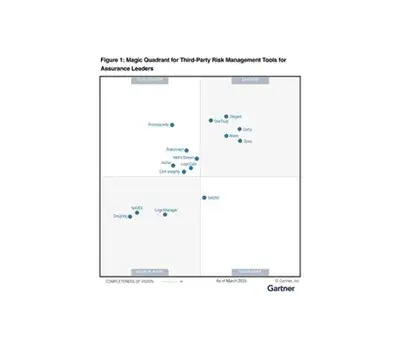
Specialized software, including for third-party risk management and global due diligence, can also help you keep on top of another complicated and important compliance area: AML and KYC.
It's an investment you might want to consider well before your IPO.
Behind these deceptively simple acronyms lurk a host of regulations related to sanctions lists, fraud, bribery, corruption and more, heightening investor scrutiny in areas like vendor management.
The SEC adopted enhanced cybersecurity disclosure requirements in July 2023, which fundamentally changed the compliance landscape for public companies.
These rules require current reporting of material cybersecurity incidents and annual reporting of company processes for identifying, assessing, and managing material cybersecurity risks, making SEC Disclosure Readiness packages another worthy technology investment.
The package for cybersecurity includes:
The SEC has declared artificial intelligence "the most transformative technology of our times" while cautioning that public companies using AI must be honest about the role AI plays in their business and avoid exaggerating it to the point of "AI washing."
Companies must ensure that claims about AI prospects have reasonable bases and that these bases are disclosed to investors, with specific definitions of AI terminology used in business contexts.
Successful IPOs require systematic governance build-out. This timeline provides sequenced milestones for pre-IPO companies:
Use this IPO governance readiness checklist to assess your current capabilities and identify gaps requiring attention before S-1 filing:
☐ The majority of directors are independent
☐ At least one director with public company experience
☐ Board expertise covers cybersecurity, AI and ESG, where material
☐ Formal board charter and governance guidelines adopted
☐ Director and officer liability insurance secured
☐ Audit committee established with a financial expert
☐ Compensation committee with independent members
☐ Nominating/governance committee operational
☐ Committee charters drafted and approved
☐ Meeting schedules aligned with public company requirements
☐ ICFR framework documented and tested
☐ SOX 302 and 404 compliance program in place
☐ External auditor engaged for public company audits
☐ GAAP-compliant financial statements prepared
☐ Disclosure controls and procedures established
☐ Enterprise risk management framework operational
☐ Cybersecurity incident response plan documented
☐ AI governance policies in place
☐ Climate/ESG data collection capabilities established
☐ Regulation FD compliance protocols defined
☐ Board portal with secure document management
☐ Entity management system for corporate structure
☐ Audit trails for governance decisions and approvals
☐ Executive succession plans documented
☐ Code of ethics and whistleblower program operational
Download the complete pre-IPO governance checklist with detailed implementation guidance for each requirement.

Managing the governance complexity documented above requires more than spreadsheets and manual processes, and the burden only intensifies after going public.
That's why AI-powered governance technology has become essential infrastructure for companies preparing for IPO. With this goal in mind, the Diligent One Platform provides unified governance, risk and compliance management that addresses the integration gaps slowing IPO preparation.
Rather than managing board materials, compliance documentation and financial controls in disconnected systems, companies access consolidated views of governance readiness — the visibility that investors evaluate during due diligence.
Diligent Market Intelligence provides real-time insights into shareholder activism, proxy voting patterns and compensation benchmarks.
Pre-IPO companies use Glass Lewis integration to test compensation plans against proxy advisor criteria before going public, while executive compensation benchmarking with 12+ years of global data ensures alignment with market standards.
Additionally, shareholder activism tracking identifies potential investor concerns early, giving boards time to address governance gaps before they surface in roadshow conversations.
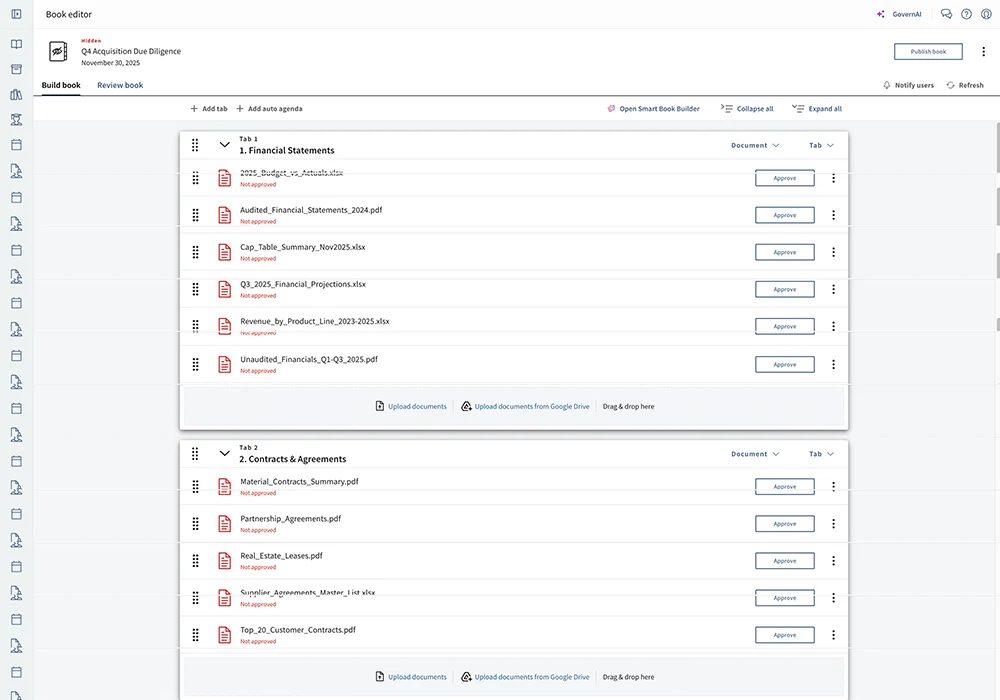
For pre-IPO companies building sophisticated board operations, Diligent Boards delivers AI-powered capabilities that demonstrate institutional-grade governance maturity:
Diligent ACL Analytics addresses the internal controls and SOX compliance requirements that define IPO readiness.
Automated data analytics enables 100% transaction testing rather than sample-based approaches, while continuous monitoring identifies control gaps before they become audit findings.
Risk-based testing focuses audit resources on the highest-impact areas, critical for companies building ICFR frameworks under tight timelines.
Together, these tools create the governance infrastructure that institutional investors expect. The investment delivers immediate returns through improved efficiency and decision-making based on current, auditable data.
But the value extends beyond the offering itself. The same infrastructure becomes the foundation for ongoing public company operations, supporting the increased meeting cadence, disclosure requirements and investor engagement that public markets demand.
Ready to build governance infrastructure that supports successful public market entry? Schedule a demo to see how Diligent accelerates IPO preparation while enabling continuous compliance monitoring.
Companies should begin governance build-out 12-18 months before anticipated S-1 filing. This timeline allows adequate time for establishing independent board committees, implementing SOX frameworks, building disclosure controls and adopting governance technology.
Earlier preparation also provides flexibility if market conditions shift your IPO timing.
The most common governance gaps include weak or non-independent board structures, incomplete internal controls over financial reporting, underdeveloped risk management frameworks and a lack of cybersecurity or ESG disclosure readiness.
Companies that discover these gaps during S-1 review face extended timelines and potential valuation discounts.
Essential technology includes a secure board portal for director communications and materials, compliance management platforms for SOX and regulatory tracking, entity management software for corporate structure oversight and risk management systems for enterprise and cyber risk.
Integrated platforms that unify these capabilities provide better audit trails and reduce implementation complexity.
Post-IPO, boards face increased meeting cadence, analyst and investor engagement obligations, more intensive disclosure and reporting requirements and potential activist attention.
Directors must maintain governance structures established during IPO preparation while adapting to the real-time demands of public companies. Ongoing education and continuous improvement of governance frameworks become essential for sustained compliance and board effectiveness.
Request a demo to see how Diligent accelerates IPO preparation and streamlines governance oversight.